
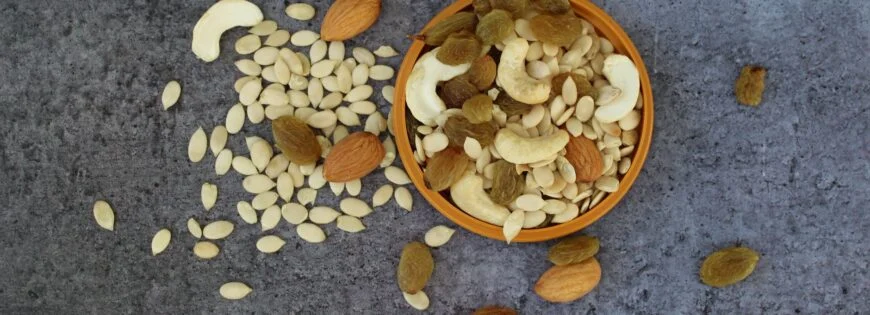
This dry fruit panjiri recipe makes a crumbly, nutty winter mix from roasted atta, desi ghee, nuts and raisins. Many Pakistani homes cook a big jar once the weather cools, then eat it by the spoonful with chai or warm milk.
Quick answer: To make panjiri, roast whole wheat flour on low heat for 15 to 20 minutes, adding desi ghee as you go. Fry the nuts separately and chop them. Let the flour cool, then mix in powdered sugar, nuts, raisins and cardamom. Store it in a dry, airtight jar.
Why does homemade panjiri turn out raw, greasy or sticky?
The ingredient list is short, so most trouble comes from heat and timing. High heat colours the outside of the flour before the inside has cooked, and the result tastes raw even though it looks brown.
Sticky panjiri usually means the sugar went in while the pan was still hot, so it melted. A greasy batch has more ghee than the flour could take. Soft nuts are often old ones, or ones that were chopped and left sitting in a humid kitchen.
What goes into a dry fruit panjiri recipe?
These quantities make a family-size jar. Measure everything before you light the stove, because the flour needs your full attention once it starts.

- 2 cups whole wheat flour (atta)
- About 3/4 cup desi ghee, divided
- 1/3 cup almonds
- 1/3 cup cashews
- 1/4 cup walnuts
- 2 tablespoons pistachios
- 2 to 3 tablespoons raisins
- 1/2 to 2/3 cup powdered sugar or bura, to taste
- 1/2 teaspoon cardamom powder
- Optional: 2 tablespoons edible gum (gond)
Treat the nut amounts as a guide. You can swap one for another as long as the total stays about the same. Shelled almonds save the cracking, and unroasted cashews let you control the colour yourself.
How do you make panjiri step by step?
Use a heavy karahi and keep the flame low from start to finish. Set aside around 45 minutes, including chopping.
- Fry the nuts. Warm 2 tablespoons of ghee. Fry the almonds and cashews for a minute or two, then the walnuts and pistachios very briefly. Lift them out.
- Puff the raisins and gond. Fry the raisins until they plump. If using gond, fry small pieces until they swell and turn crisp, adding a little more ghee if needed.
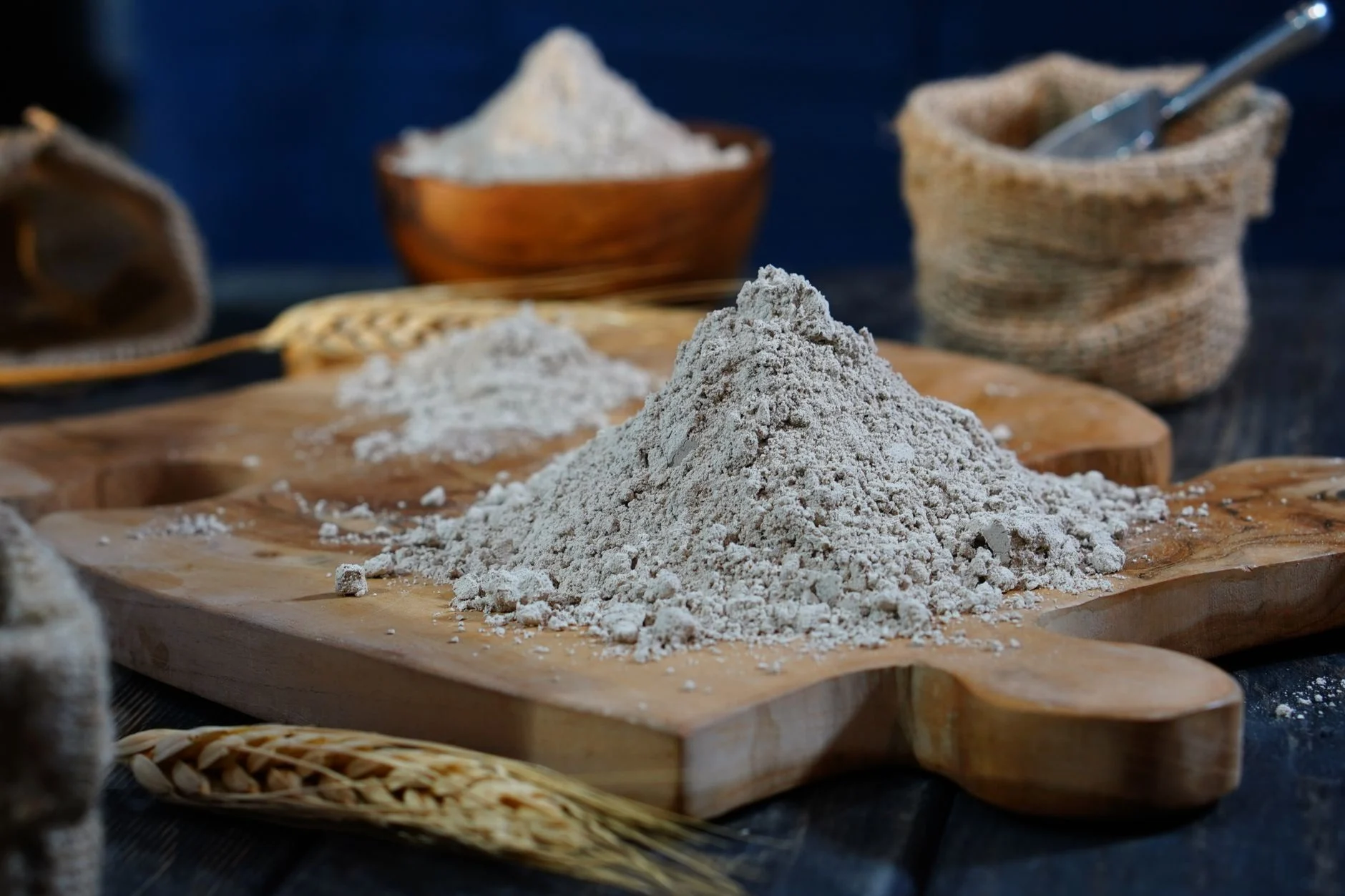
- Roast the atta. Add the flour and most of the remaining ghee. Stir constantly for 15 to 20 minutes, until it turns golden and smells nutty.
- Adjust the ghee. The flour should look like damp sand. Add the last spoonfuls only if it seems dry or powdery.
- Cool it. Tip the flour into a wide tray and stir for a couple of minutes so the bottom does not keep cooking. Leave it until it reaches room temperature.
- Chop and crush. Chop the nuts coarsely. Crush the fried gond with a mortar or the base of a cup.
- Mix. Add sugar, cardamom, nuts, raisins and gond. Rub the mixture between your fingers to break up lumps.
How can you tell when the atta is roasted enough?
Go by smell, colour and taste together. Properly roasted atta is a few shades darker than when you started, smells like toasted biscuits and feels looser in the pan.
Taste a pinch after letting it cool for a few seconds. Any floury, raw edge means it needs more time. If it smells sharp or looks dark brown in patches, the flame is too high, so pull the pan off the heat and keep stirring.
What do the nuts add to panjiri?
They bring crunch and flavour, along with protein and unsaturated fats. According to the US National Institutes of Health, 1 ounce (about 28 g) of dry roasted almonds provides 80 mg of magnesium and the same weight of cashews provides 74 mg. Almonds are also a source of vitamin E.
Walnuts contain the plant omega-3 fat ALA, about 2.5 g per ounce according to the California Walnut Commission. Those figures describe the nuts alone. Panjiri also carries ghee, sugar and flour, so it is a rich food that suits small servings.
Can you turn panjiri into laddoos?
Yes. Warm a few extra spoons of ghee, pour it into the mixture a little at a time, and press small portions firmly in your palm. Stop adding ghee as soon as the mix holds its shape.
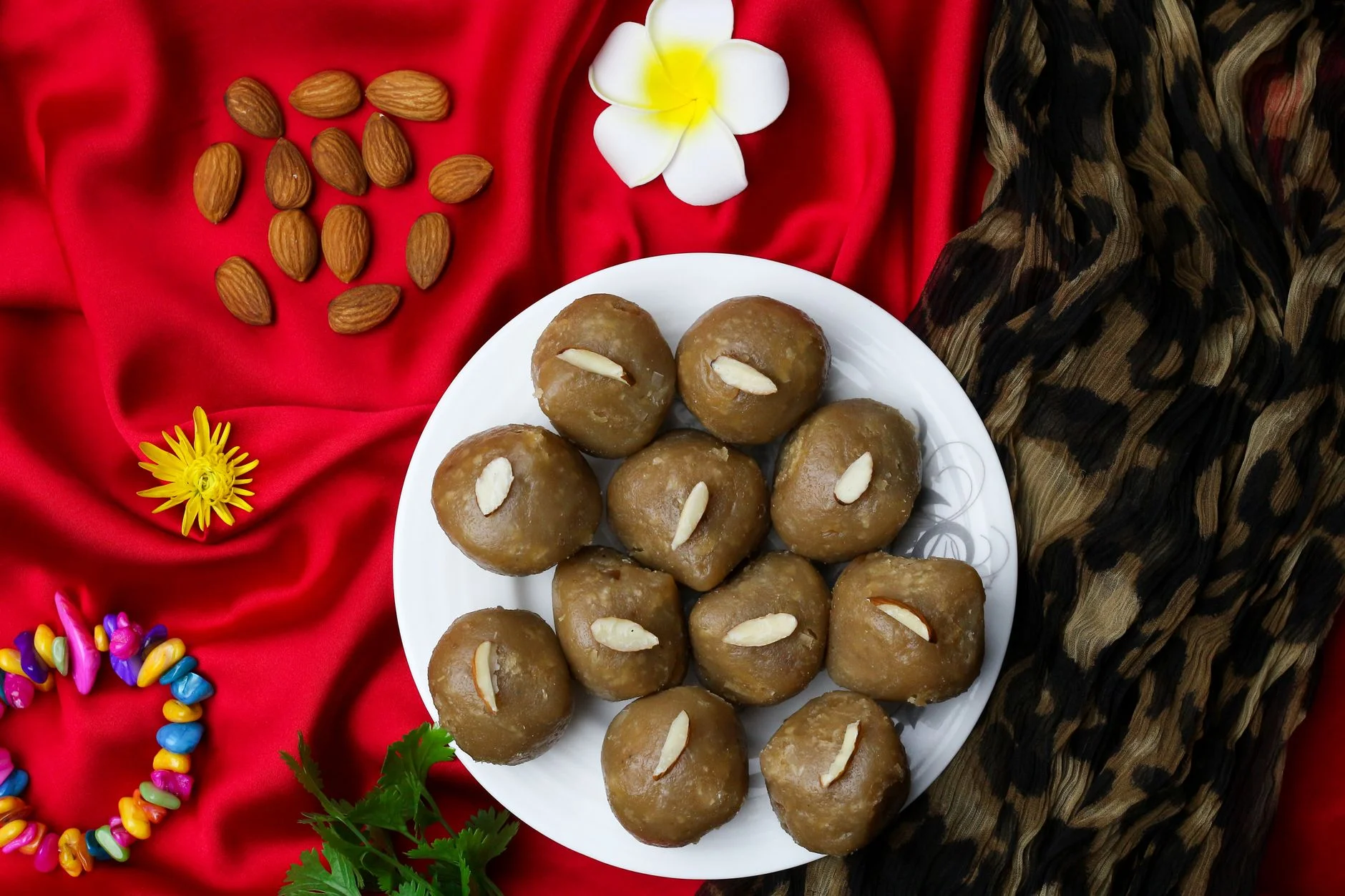
Laddoos pack neatly into lunch boxes and are easy to hand round to guests. Loose panjiri is better if you like it sprinkled over warm milk or porridge.
How do you fix a batch that went wrong?
Many problems can be rescued if you catch them early. Work in small steps and taste as you go.
- Raw taste: if the sugar is not in yet, return the flour to a low flame and keep stirring. Once sugar is mixed through, reheating will melt it, so note the timing for next time.
- Too greasy: roast a few spoonfuls of plain atta in a dry pan, cool it and fold it in.
- Too dry: drizzle in a spoonful of warm ghee and rub it through with your fingers.
- Too sweet: add more roasted flour or chopped nuts to balance it.
- Lumpy: break the lumps by hand, or give the mix one or two short pulses in a dry grinder before the nuts go in.
How should you store panjiri?
Cool it completely, then pack it into clean, completely dry glass or steel jars. Any warmth trapped under the lid turns into moisture. Keep the jars in a cool, dark cupboard and always use a dry spoon.
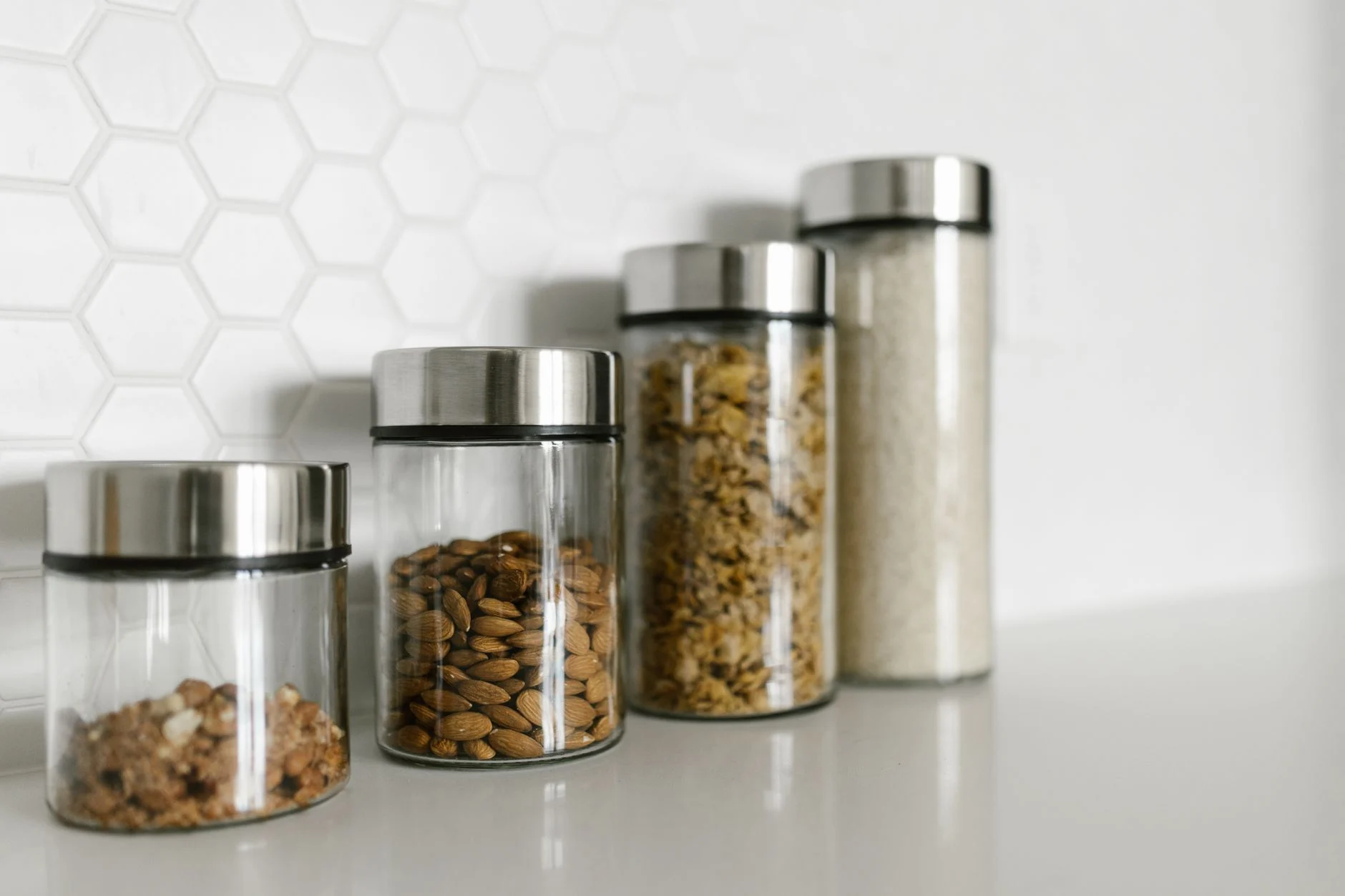
Aim to finish a batch within three to four weeks. Splitting it into two jars means one stays closed while you work through the other. Throw it out if it smells stale or sour. Whatever nuts you have left over need the same care, and our guide on how to store nuts and dry fruits covers that.
What is Organio’s take on a good panjiri?
At Organio, we would spend the effort on slow roasting and fresh nuts. You can leave out the gond or cut back the sugar and still have a jar worth making.
Before you cook, taste one of each nut. A fresh one is crisp and mild, while a bitter or oily-smelling one will show up in the whole batch. If you need to restock, you can look at our premium walnuts along with the other nuts in the Organio shop.
Frequently asked questions
Can I make panjiri without gond?
Yes. Gond adds a light crunch, but the recipe works without it. You may need slightly less ghee, since you are not frying the gum.
Can I add semolina (sooji) to panjiri?
You can replace part of the atta with sooji for a grainier texture. Roast it separately until fragrant and lightly golden, then mix it with the roasted flour.
Can I use jaggery (gur) instead of sugar?
Yes. Grate dry gur finely and add it once the flour has cooled. Damp or soft gur can form clumps and shorten the time the panjiri stays crumbly, so make a smaller batch.
Should panjiri go in the fridge?
It is not needed in cool winter weather if the jar is dry and sealed. Chilling firms up the ghee and hardens the mix, and a cold jar can collect moisture when opened in a warm room.
What can I serve with panjiri?
Try it with chai or a glass of warm milk. It also works as a topping for plain porridge or sliced banana.