Peanut butter vs almond butter comes up a lot once winter sets in and people start stocking up on breakfast spreads. Both jars look similar on the shelf. Both are made from ground nuts (well, peanuts are technically legumes, but they behave like nuts in the kitchen). The price gap between them is large, though, so it is fair to ask what you actually get for the extra money.
Short answer: Neither is clearly “healthier.” Per two tablespoons, both have just under 200 calories and about 7 grams of protein, with peanut butter slightly ahead on protein. Almond butter has more fibre, vitamin E, calcium and iron, and less saturated fat. Pick by taste, budget and how you plan to eat it.
Why is choosing between peanut butter and almond butter confusing?
The problem is mostly marketing. Almond butter is often sold as the premium, “clean” option, and peanut butter as the everyday one. That framing makes people assume almond butter must be better for them in every way. It isn’t that simple.
The second problem is the label. Many supermarket jars in Pakistan add sugar, salt, hydrogenated or palm oil, and flavourings. A sweetened, oil-heavy almond butter can be a worse buy than a plain peanut butter made from nothing but peanuts. So the brand and the ingredient list matter as much as the nut.
How do peanut butter and almond butter compare on nutrition?
The numbers below come from USDA FoodData Central entries for unsalted, plain versions of each spread, as summarised by Healthline. Values are for a two-tablespoon serving.
- Calories: just under 200 for both. There is no meaningful difference.
- Protein: about 7.1 g in peanut butter and 6.7 g in almond butter.
- Fibre: about 3.3 g in almond butter and 1.6 g in peanut butter.
- Fats: almond butter has roughly 25% more monounsaturated fat. Peanut butter has a little over twice the saturated fat, though the amount is still small in both.
- Vitamins and minerals: almond butter has nearly three times the vitamin E, about twice the iron and around seven times the calcium. Both contain magnesium.
Both spreads give you plant protein and mostly unsaturated fats, and either can be part of a heart-healthy diet when you keep portions sensible. Almond butter wins on micronutrients. Peanut butter wins slightly on protein and by a wide margin on price.
What does peanut butter do better?
Peanut butter is cheaper, easier to find and tastes the way most people expect a nut spread to taste: roasted, slightly salty, a bit sweet. Kids usually accept it right away, which matters if you are buying one jar for the whole family.

It also works well in desi cooking. A spoonful stirred into a chicken or vegetable curry gives a satay-style richness, and it blends smoothly into a banana milkshake. If you go through a jar every week or two, peanut butter keeps the habit affordable.
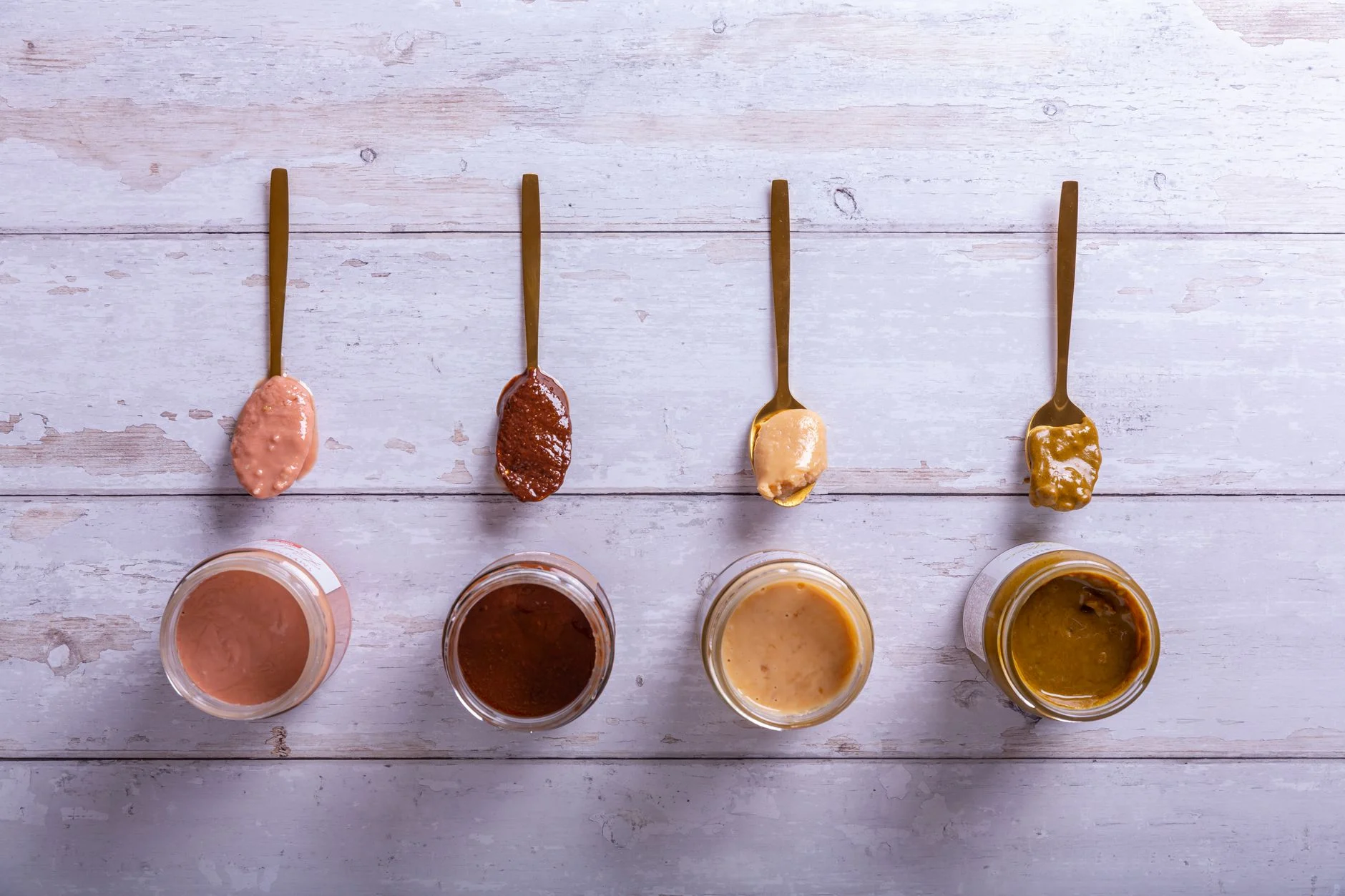
Organio peanut butter comes in classic and chocolate versions, so you can keep one for savoury cooking and one for breakfast.
When is almond butter the better choice?
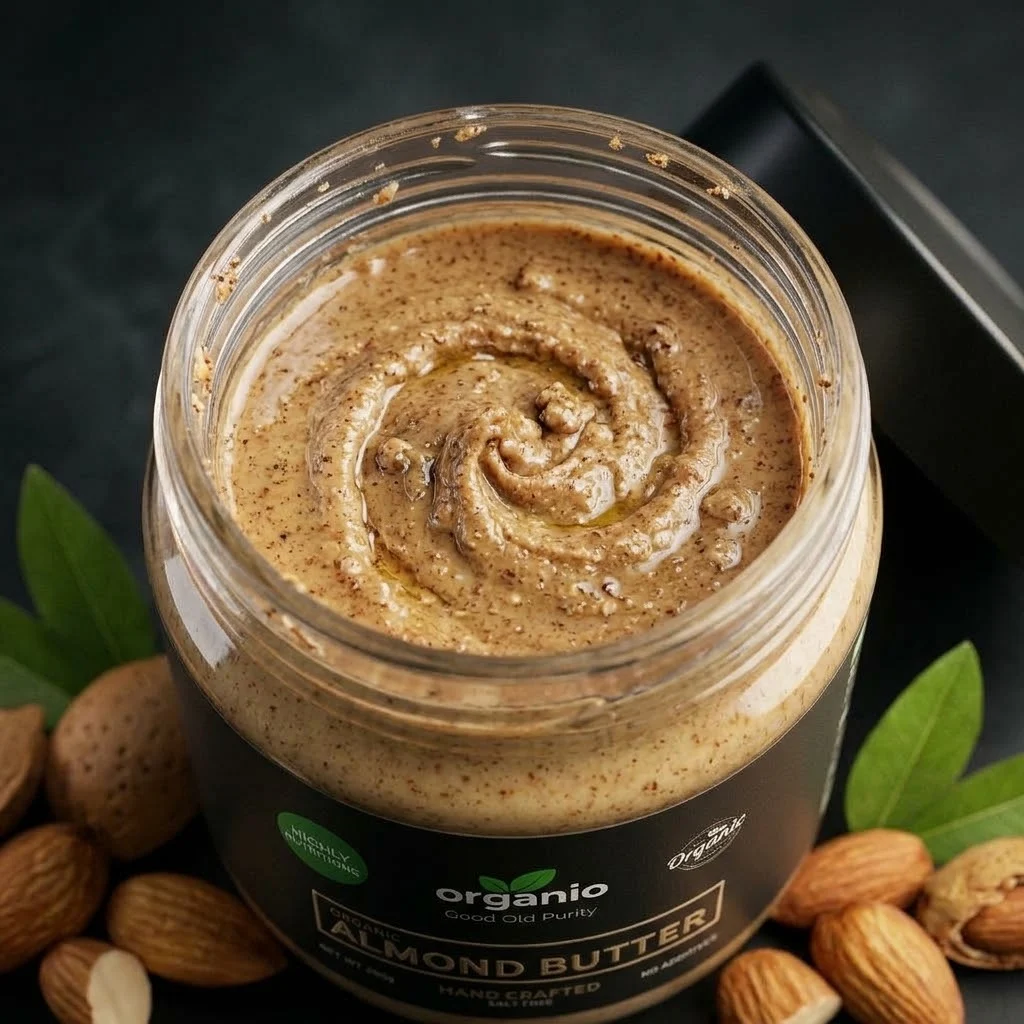
Almond butter makes sense when you want more fibre and vitamin E from the same spoonful, or when you simply prefer its taste. It is milder and slightly earthy, with a looser, grainier texture. Some people find peanut butter too heavy and switch for that reason alone.
It is also the obvious choice for anyone who avoids peanuts. Keep in mind that almonds are tree nuts, so almond butter is not a safe swap for someone with a tree nut allergy. If allergies are part of the picture in your home, check with your doctor before introducing either.
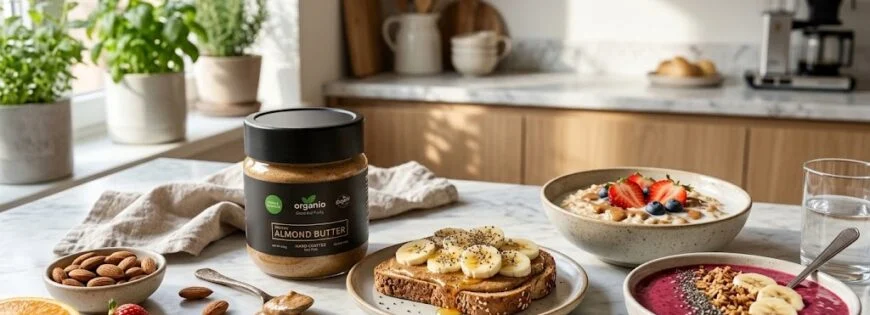
Organio almond butter is a good fit for oats, smoothies and plain roti on a cold morning, where its flavour comes through without being overpowering.
How should you choose a nut butter in Pakistan?
Start with the ingredient list rather than the front of the jar. Here is what to check:
- Short ingredients. The best jars list the nut and maybe salt. Anything beyond that should have a clear reason to be there.
- Added sugar. Look for sugar, glucose, corn syrup or “sweetener” in the list. If you want sweetness, add honey or banana yourself.
- Added oils. Hydrogenated vegetable oil or palm oil is often added to stop the natural oil from separating. A layer of oil on top of a plain jar is normal; just stir it back in.
- Texture. Smooth spreads better on toast. Crunchy adds bite to oats and salads.
- Freshness. Check the manufacturing date. Nut oils go stale over time, and a jar that smells like paint or cardboard is past its best.
Once opened, keep the lid tight and store the jar away from the stove. In summer, the fridge helps a natural nut butter last longer, though it will firm up.
How can you use either spread in a winter routine?
Winter mornings in Pakistan are a good time to build a nut butter habit, because warm breakfasts pair so well with it.
- Stir a tablespoon into hot oats or daliya just before serving.
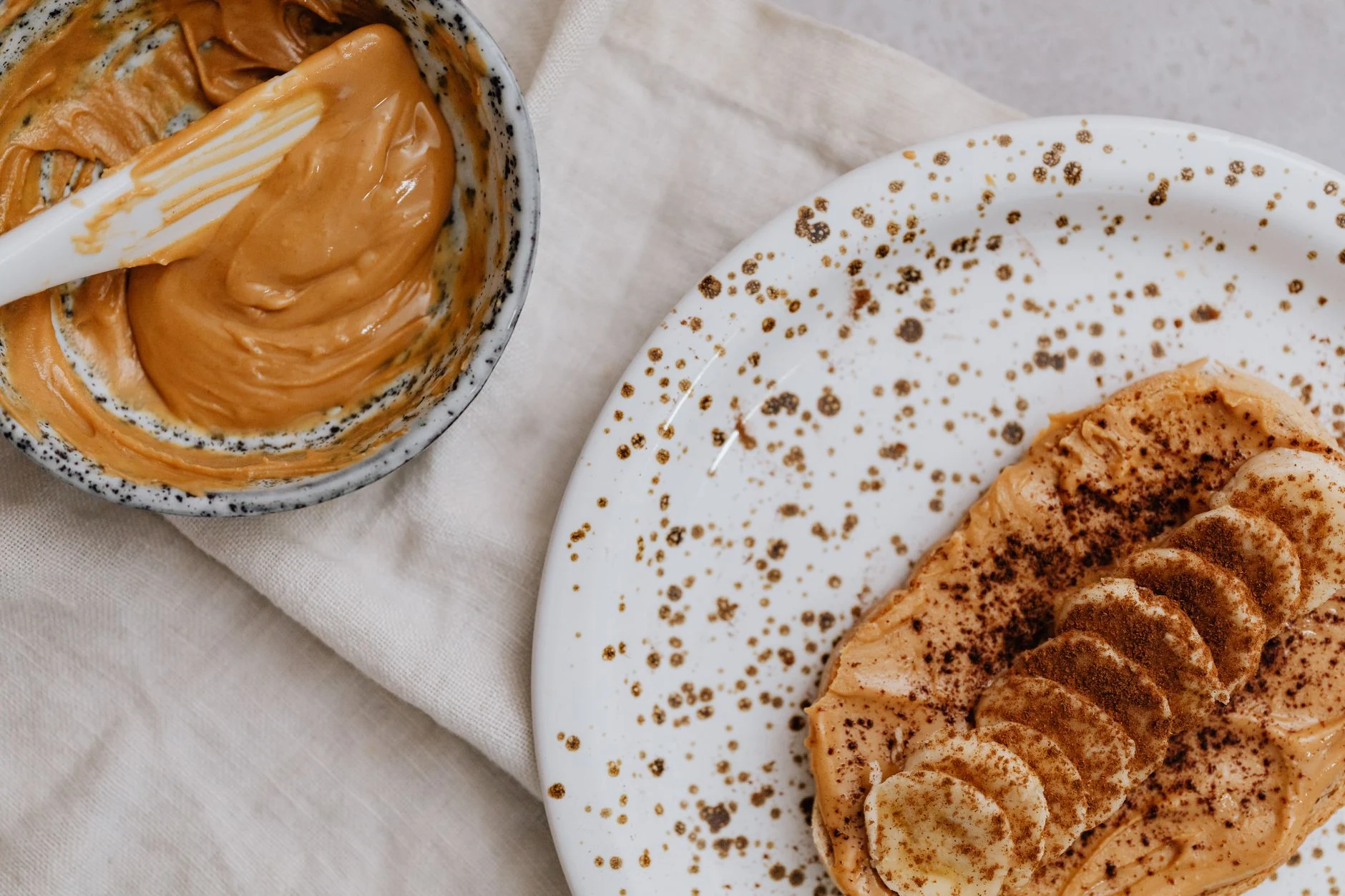
- Spread it on toast or a plain paratha with sliced banana and a little cinnamon.
- Blend it into a date and milk shake for an after-school snack.
- Mix it with soy sauce, lemon and a little chilli for a quick dip for vegetables or chicken.
- Eat a spoonful with an apple when you need something filling at 4 pm.
Two tablespoons is a standard serving. Nut butters are energy dense, so measuring for the first week helps you see what a portion actually looks like.
What is Organio’s take on peanut butter vs almond butter?
We don’t think you need to pick a side. Plenty of families keep both: peanut butter for everyday cooking and the kids, almond butter for breakfasts where they want a milder taste and more fibre. Rotating between nut butters also gives you a wider spread of nutrients than eating the same one every day.
What we do care about is the jar itself. Whatever nut you choose, read the ingredients, skip the added sugar and hydrogenated oil, and buy from someone who can tell you what went into it. You can see the full ingredient details on each product in our nut butter range, or try the Nut Butter Trio if you want to taste the difference before committing to one.
Frequently asked questions
Is almond butter healthier than peanut butter?
Not overall. Almond butter has more fibre, vitamin E, calcium and iron, while peanut butter has slightly more protein. Calories are almost the same. The healthier jar is usually the one with fewer added ingredients.
Which has more protein, peanut butter or almond butter?
Peanut butter, by a small margin. Two tablespoons have about 7.1 g of protein, compared with about 6.7 g in almond butter.
Why is almond butter more expensive than peanut butter?
Almonds cost more to grow and buy than peanuts, and a jar of almond butter needs a lot of them. That raw material cost is the main reason for the price gap.
Should natural nut butter be kept in the fridge?
It isn’t required, but it helps in hot weather. Refrigeration slows the oil from going stale and reduces separation. Let the jar sit out for a few minutes before spreading.
Can I swap peanut butter for almond butter in recipes?
Yes, in most recipes you can swap them one for one. Almond butter is a little runnier and milder, so you may want a pinch of salt in baking or sauces.