You are standing at the dry fruit shelf, or scrolling a shop page, and two bags of cashews look almost the same. One says roasted. The other says unroasted. The price is close, so which one do you pick? The roasted vs raw cashews question comes up in most kitchens that buy nuts in bulk, and the right answer depends on what you plan to do with them.
Buy roasted cashews if you want a ready-to-eat snack with a toasty, buttery flavour. Buy unroasted (raw) cashews if you plan to cook with them, blend them into creamy sauces, or roast them yourself. Both are the same nut. The difference is heat, flavour and how long they keep.
Roasted vs raw cashews: what is the real difference?
A raw or unroasted cashew is sold as it comes after shelling and cleaning, without a roasting step. It is pale cream in colour, softer to bite, and mild in taste. A roasted cashew has been heated until it turns golden. The heat dries it a little, so it feels crunchier and the flavour becomes deeper and more buttery.
Because they come from the same nut, the base nutrition is very close. According to USDA data, a 28 g (1 oz) serving of cashews has roughly 157 calories, about 5 g of protein and 12 g of fat, along with magnesium (about 83 mg) and copper (about 0.6 mg). Those numbers are for plain cashews. Added oil or salt during roasting will change them, so check the label on any bag you buy.
Which is better for snacking: roasted or unroasted?
Roasted wins for snacking, mostly on taste and texture. The crunch is more satisfying, and the toasty smell makes a handful feel like a treat. If you keep a bowl on the table for guests, roasted cashews disappear first.
Raw cashews are still fine to eat as they are. They taste milder and a bit sweeter, with a softer bite. Some people prefer that, especially when they are eating them with dates or tea. If you are unsure, buy a small bag of each and see which one your family reaches for.
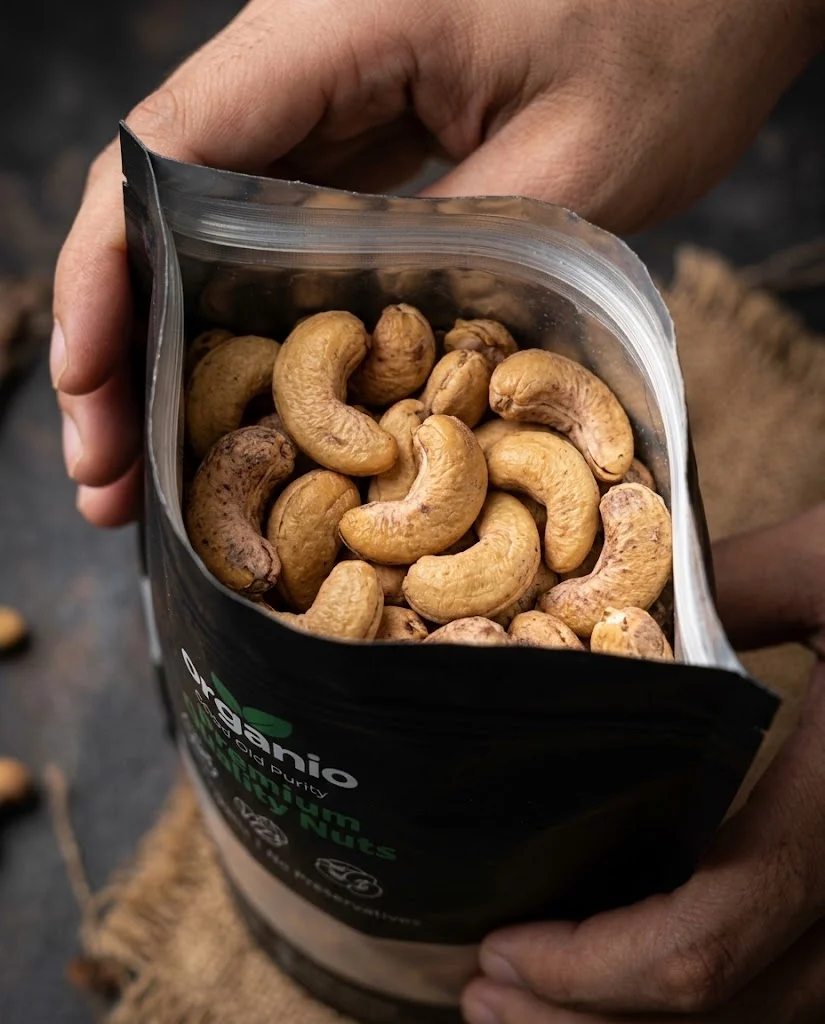
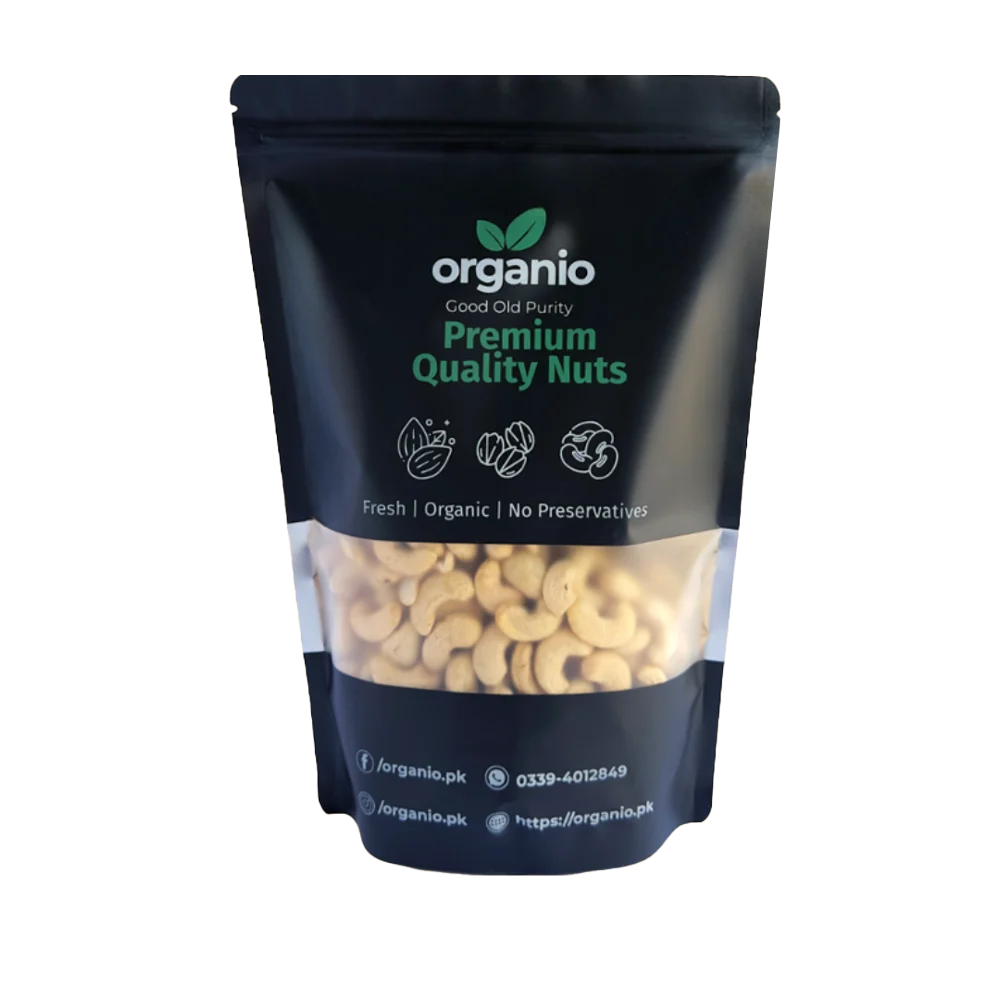
Organio sells both versions. You can see the roasted cashews and the unroasted cashews side by side, each in resealable bags.
Which cashews are better for cooking and blending?
Unroasted cashews are the better pick for most cooking. They are neutral in flavour, so they blend into smooth, creamy sauces without adding a roasted taste. This is why they are the usual choice for cashew cream, white gravies, korma-style curries, cheesecakes and dairy-free sauces.
The usual method is to soak them in hot water for 15 to 20 minutes, drain them, and blend with fresh water until smooth. Soaking softens the nut, so even a basic home blender can handle it.
Roasted cashews work well on top of dishes rather than inside them. Chop a handful over a salad, fried rice, pulao or a bowl of yoghurt for crunch. They also suit trail mixes and baking, where you want the nut to stay distinct.
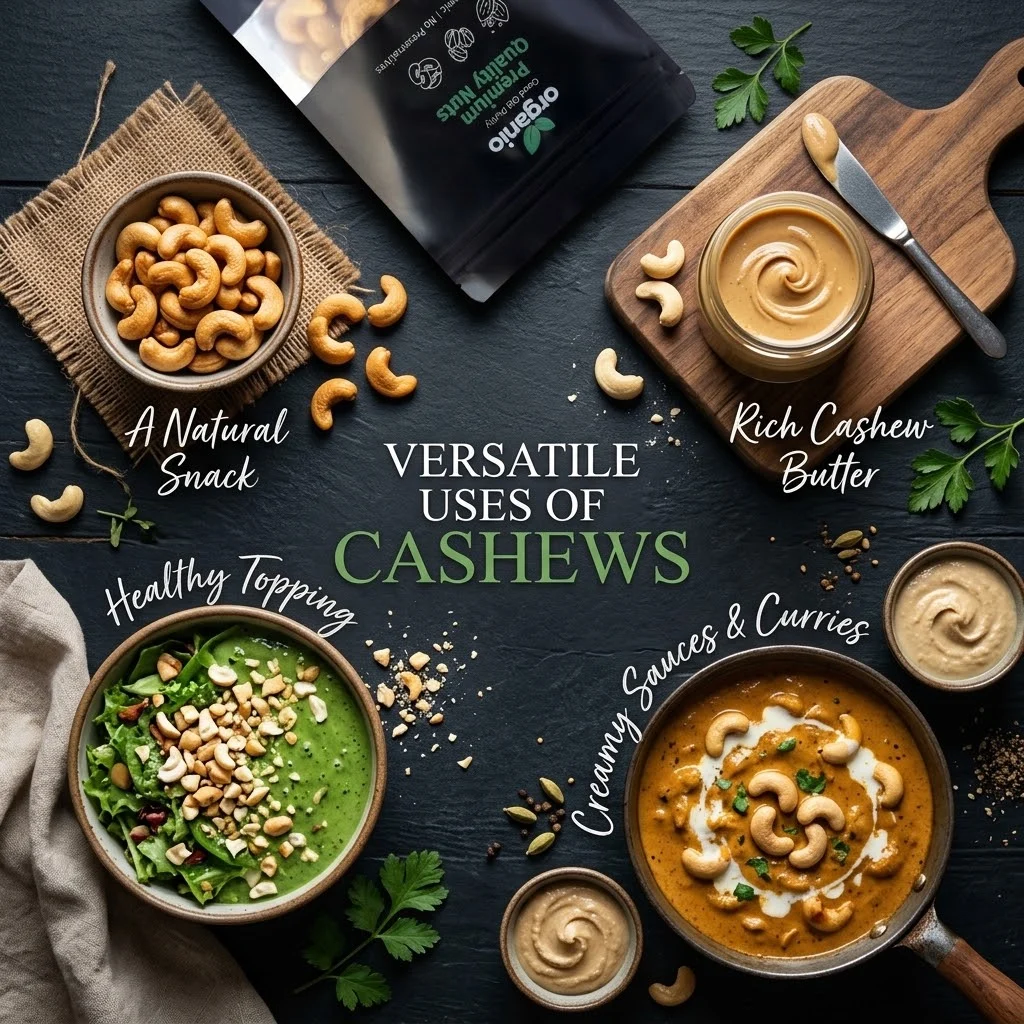
If you would rather skip blending altogether, cashew butter is already smooth and spreads on toast or stirs into porridge and smoothies.
Can you roast cashews at home?
Yes, and it is simple. Home roasting is a good reason to buy unroasted cashews, because you control the colour and can stop early if you like a lighter roast.
- Heat the oven to 175°C (350°F).
- Spread the cashews in a single layer on a baking tray.
- Roast for about 7 to 10 minutes, stirring once or twice.
- Take them out when they turn light golden and smell toasty. They keep darkening on the hot tray, so do not wait for deep brown.
- Let them cool fully before storing.
Stay close to the oven. Cashews go from golden to burnt quickly, and ovens vary a lot. A dry pan on low heat also works if you stir constantly.
How should you store roasted and raw cashews?
Cashews are rich in natural oils, and oils turn stale when they meet air, light and warmth. That applies to both types. Roasted cashews tend to lose their crunch and flavour sooner once the bag is open, so they are the ones to watch.
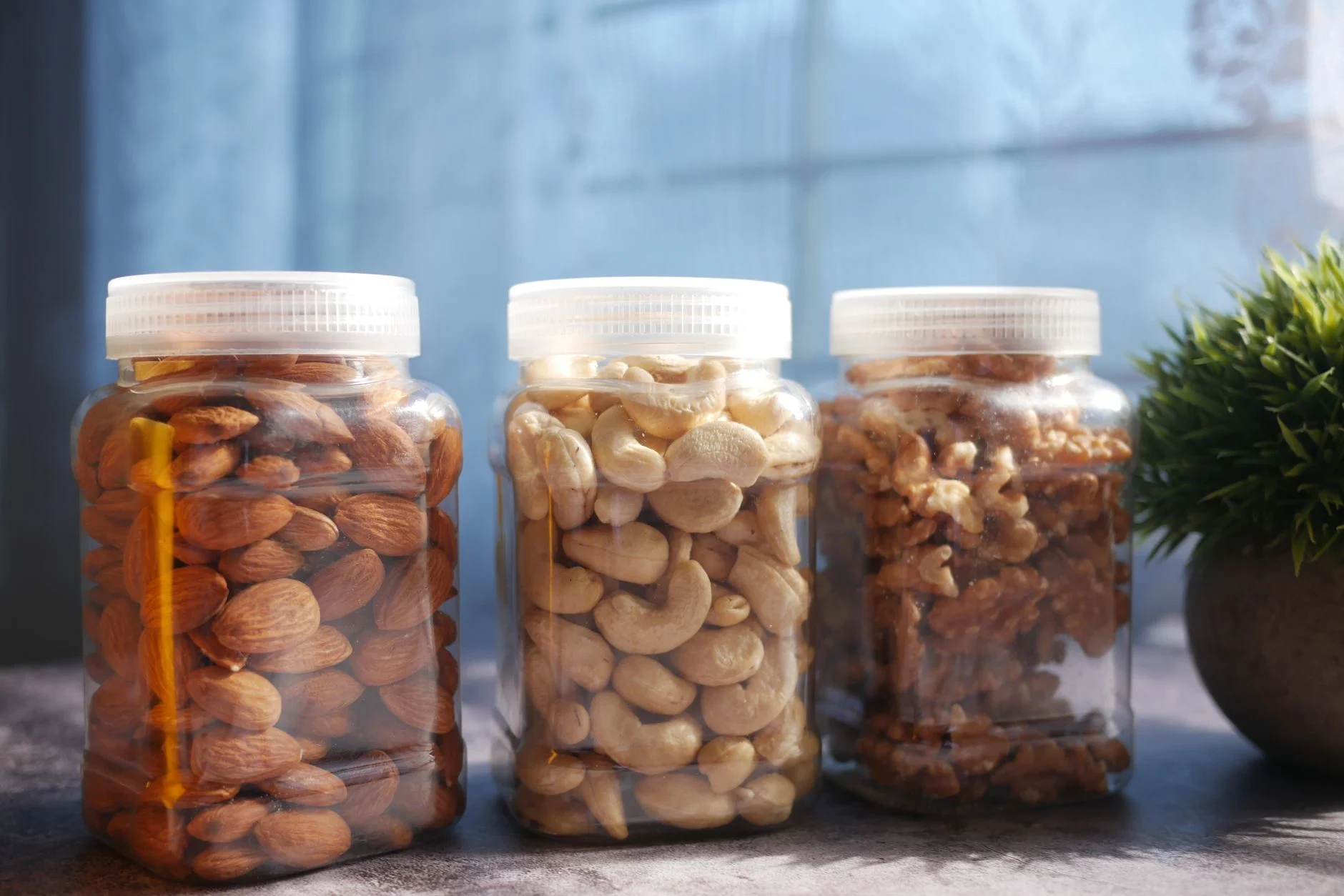
- Use an airtight container. Press the air out of the bag and close the zip, or move the nuts to a jar with a tight lid.
- Keep them cool and dark. A kitchen cupboard away from the stove is fine for a few weeks.
- Use the fridge or freezer for longer storage. Cold slows down the oils going stale. Bring them to room temperature before opening the container so no moisture settles on the nuts.
- Trust your nose. If cashews smell sharp, bitter or like paint, throw them out.
Our guide on how to store nuts and dry fruits so they stay fresh covers more of these habits.
What should you check on the pack before buying cashews?
Look at the ingredient list first. Plain cashews should list cashews and nothing else, or at most a little salt if they are salted. Then look at the nuts themselves. Whole, evenly coloured pieces with few broken bits are a good sign. Pale cashews should not look yellow or oily, and roasted ones should be golden rather than dark brown. Finally, smell the bag if you can. Fresh cashews smell lightly sweet and nutty. A sharp or musty smell means the nuts have been sitting too long.
What does Organio recommend?
If you only buy one bag, buy the version you will actually use within a few weeks. Fresh nuts taste better than a big bag that sits half-finished in the cupboard.
For most homes we suggest a small bag of roasted cashews for snacking and gifting, and a bag of unroasted cashews for cooking and home roasting. All our cashews come in resealable bags so you can keep the air out after every use. You can browse the full range of premium nuts and dry fruits if you want to pair cashews with almonds, walnuts or pistachios.
FAQs about roasted and raw cashews
Are roasted cashews the same nutrition as raw cashews?
They are very close, because both are the same nut. Roasting without added oil or salt changes little. If a roasted cashew is cooked in oil or coated in salt, calories and sodium will be higher, so read the ingredient list.
Can I eat raw cashews straight from the bag?
Yes. Unroasted cashews sold for eating are fine as a snack. They taste milder and feel softer than roasted ones. Cashews still in their natural shell are a different product, and the shell needs to be processed before they are eaten.
Which cashews are best for cashew cream?
Unroasted cashews. Their neutral flavour lets the cream taste clean, and soaking them first helps them blend smooth.
How long do cashews stay fresh?
It depends on the storage. In an airtight container in a cool, dark place they stay good for several weeks. In the fridge or freezer they last much longer. Roasted cashews lose their crunch sooner than unroasted ones once the bag is open.
Why do my cashews taste bitter or sharp?
That usually means the natural oils have gone stale from air, heat or light. Throw them out and store the next batch in a sealed container somewhere cool.