
A bowl of dry fruit on a winter evening empties faster than anyone plans. So how many nuts per day make a sensible portion? The answer is smaller than most family bowls, and you can measure it without counting every kernel. Here is a simple way to portion almonds, walnuts, pistachios and cashews.
Quick answer: For most adults, about 30 grams of nuts a day is a sensible portion, roughly one small handful. That is the amount the Australian Dietary Guidelines suggest for most days. It can be one kind or a mix, ideally unsalted, eaten in place of other snacks.
How many nuts per day should an adult eat?
About 30 grams on most days. Victoria’s Better Health Channel, citing the Australian guidelines, describes this as roughly a handful or a third of a cup.
Treat the number as a general guide for adults. Your appetite, activity level and the rest of your meals all affect what fits.
Why is it so easy to eat more than a handful?
Nuts are small, tasty and ready to eat. A bowl on the table during a drama or a long chat with guests gets refilled before anyone notices.
They are also energy dense. A 28 gram portion of common tree nuts has roughly 160 to 190 calories, so three or four casual handfuls can add up to a meal’s worth of energy.
Size confuses things too. A man’s handful and a child’s handful are very different, and almond and walnut sizes vary between varieties.
What does one portion look like for each nut?
These approximate counts are for one ounce, which is about 28 grams, just under the 30 gram guide:
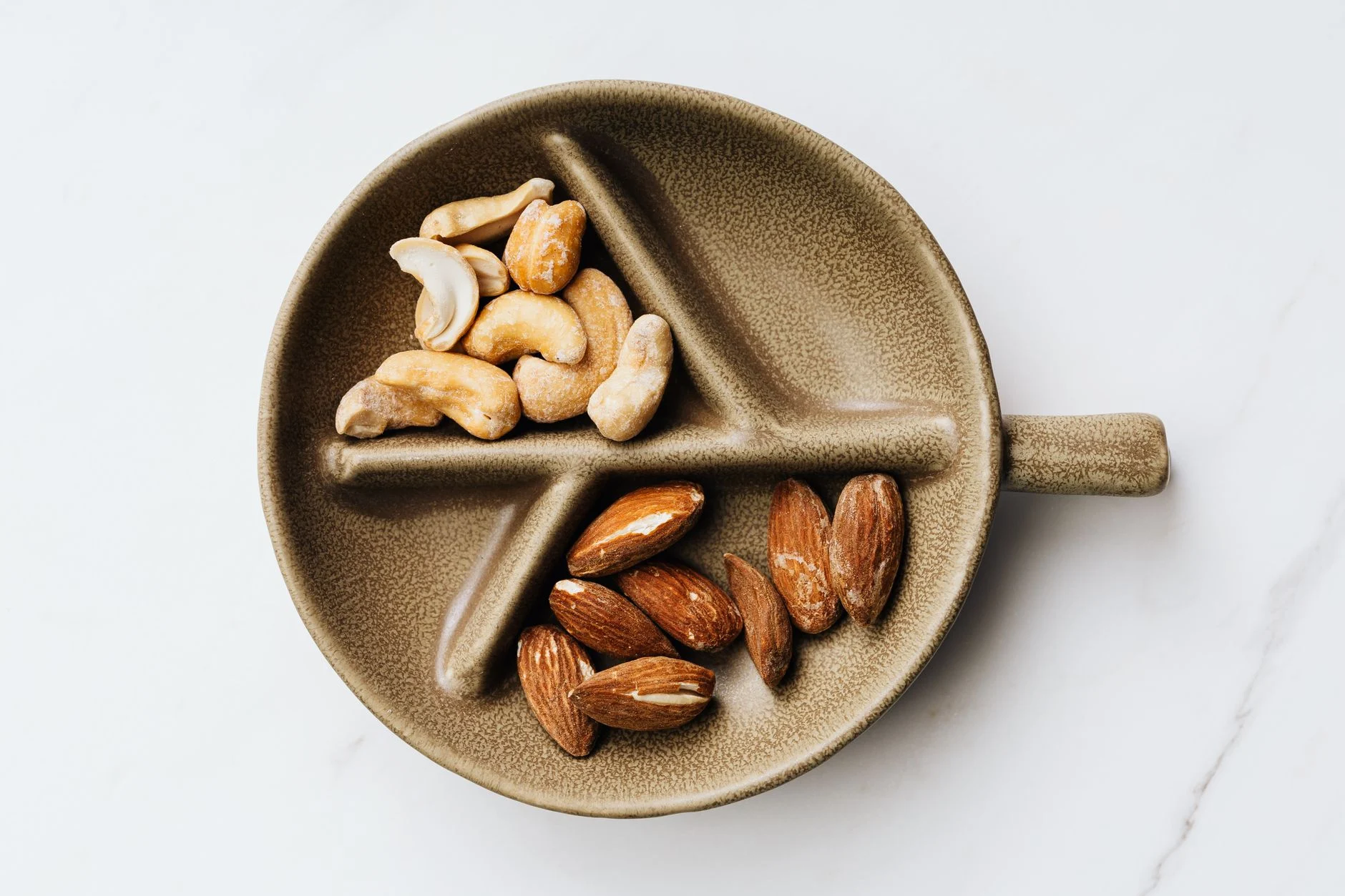
- Almonds: about 20 to 23 kernels
- Walnuts: about 14 halves
- Pistachios: about 49 kernels
- Cashews: about 16 kernels
The counts come from a University of Nebraska-Lincoln handout. Your nuts may be bigger or smaller, so weigh 30 grams once on a kitchen scale and see how it sits in your palm or in a small cup. After that, your eye can do the job.
For a mixed handful, try about 10 grams each of three nuts. That works out to roughly 8 almonds, 5 walnut halves and 17 pistachios.
What nutrients do you get from a handful of nuts?
Nuts provide plant protein, fibre, vitamins, minerals and mostly unsaturated fats. Each type has its own strengths, which is a good reason to rotate them.
Per 28 grams, the Almond Board of California’s tree nut comparison chart lists these approximate values:
- Almonds: 6 g protein, 4 g fibre, 7.3 mg vitamin E and 77 mg magnesium
- Walnuts: 4 g protein, 2 g fibre, 45 mg magnesium and the most total fat of these four at 19 g
- Pistachios: 6 g protein, 3 g fibre and 31 mg magnesium
- Cashews: 4 g protein, 1.5 g fibre and 74 mg magnesium
Walnuts stand out for their polyunsaturated fats, including a plant form of omega-3. Almonds are a source of vitamin E. Eaten in sensible amounts, nuts can be part of a heart-healthy diet.
How can you keep your portion in check?
Decide the amount before you start eating. These habits make that easy:
- Pour your portion into a small bowl and put the jar back in the cupboard.
- Pack single portions in small containers once a week for work or school bags.
- Swap nuts in for biscuits, chips or mithai at one snack time, so they replace something.
- Add them to food you already eat, such as porridge, yogurt, salad or fruit.
- Buy shell-on pistachios now and then, since shelling slows you down.
If you like variety, make a week’s batch of winter trail mix and divide it into portions straight away. Dried fruit in the mix takes up part of the handful and adds sweetness, so keep an eye on the total.
Nut butter is another easy option. Spread it thinly on toast or stir a spoonful into oats, and count it as part of your nuts for the day.
Are raw, roasted or salted nuts better?
Plain, unsalted nuts are the best everyday choice. Raw and roasted both work, so pick the flavour you will enjoy.
According to the Better Health Channel, roasting has little effect on fat content. Salt is the bigger difference. Salted, sugar-coated and heavily fried nuts are better kept for occasional treats.
Soaking almonds overnight is a texture choice that many Pakistani households grew up with. Count soaked almonds the same way, ideally by number, because water adds to their weight.
When can you fit a handful into your day?
Any time works, as long as it is the same handful and not an extra one at each sitting. Linking it to a daily habit helps you remember what you have already had.

- Breakfast: chop almonds or walnuts over porridge, daliya or yogurt.
- Mid-morning: carry a small box to work or university for the gap before lunch.
- Evening chai: serve one measured bowl per person in place of fried snacks.
- Dessert: scatter pistachios or cashews over kheer, and count them toward the day’s portion.
You can also split the amount, say half at breakfast and half in the evening. If you cook sweets with nuts, such as panjiri or halwa, remember that those servings carry nuts too, along with ghee and sugar.
How much should a family buy for a month?
At 30 grams a day, one adult would use about 210 grams a week, or 900 grams over 30 days. Four adults eating that amount daily would use about 3.6 kilograms a month.

Most homes will need less, since not everyone eats nuts every day and children usually take smaller portions. Buy what you will finish while it still tastes fresh. Keep the working jar airtight, away from heat and sunlight, and refrigerate the rest. Our guide on how to store nuts and dry fruits covers this in detail.
Two safety points matter at the family table. Tree nuts and peanuts can cause serious allergic reactions, so ask guests about allergies before serving them. Whole nuts are also a choking risk and are not suitable for children under three.
What is Organio’s view on daily nuts?
We think a small portion you enjoy regularly beats a giant bowl once in a while. Winter is a lovely time for dry fruit, and a measured handful lets a good pack last.
Start with one or two nuts your household already likes, then add another for variety. You can browse our premium almonds, walnuts, pistachios and cashews and choose the pack that matches how quickly your family eats them.
Frequently asked questions
Can I eat nuts every day?
Most healthy adults can include nuts daily as part of a balanced diet. Keep to about a handful and let it replace a less nourishing snack.
How many almonds are in one handful?
A 28 gram portion is about 20 to 23 almonds. The exact count depends on the size of the kernels and the size of your hand, so weigh a portion once to check.
Can I mix different nuts in one portion?
Yes. Share the 30 grams between two or three types, for example almonds, walnuts and pistachios. The total stays the same while the nutrients and flavours vary.
What is the best time to eat nuts?
Choose the time that helps you stick to one portion. Breakfast, mid-morning or an evening snack all work well.